Fuse symbol
Also called Fuse link
A fuse protects a circuit by melting when the current is too high for too long. It must be replaced after it operates.


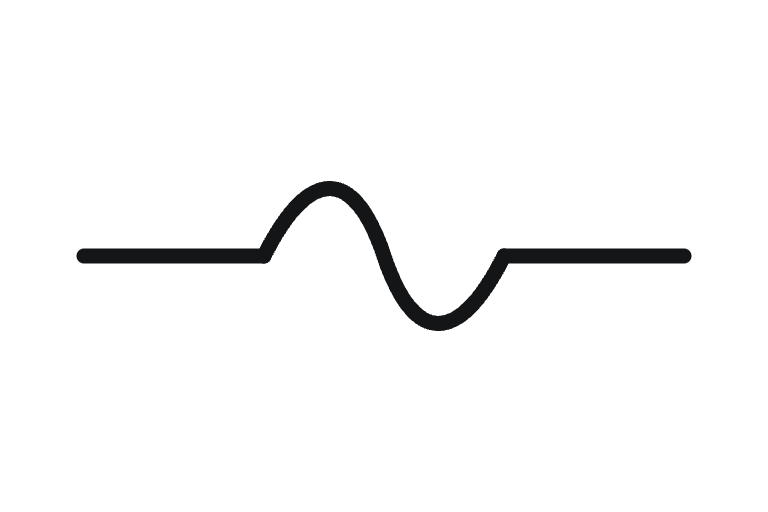
What the fuse symbol means
A fuse protects a circuit by melting when the current is too high for too long. It must be replaced after it operates.
ANSI and IEC symbols
Where you see it
Protection of control circuits, power supplies, outgoing feeders and equipment.
What is written next to it
On a schematic, the fuse usually carries its designator, rated current and type, such as FU1 2 A or F1 10 A gG.
What gets checked before energising
Before the circuit is energised, the checks on a fuse usually cover that the fitted fuse has the rating on the drawing. Each check is recorded against the tag, so the circuit can be energised and handed over with its evidence. See the ITR guide.
Related symbols
Frequently asked questions
What does the fuse symbol look like?
On ANSI drawings: An S-shaped curve in the wire. A rectangle is also used. In IEC 60617: A rectangle with the wire running through it.
Is the fuse symbol the same in IEC and ANSI?
No. A rectangle with the wire running through it. The IEC 60617 number is S00362.
Where is a fuse used?
Protection of control circuits, power supplies, outgoing feeders and equipment.
- In production since 2014
- Thousands of daily users
- On MODEC FPSO projects since 2016