Motor symbol
Also called Induction motor
An electric motor converts electrical power into mechanical power. On a one-line it is a load, drawn at the bottom of its feeder with its rating in kW or hp.


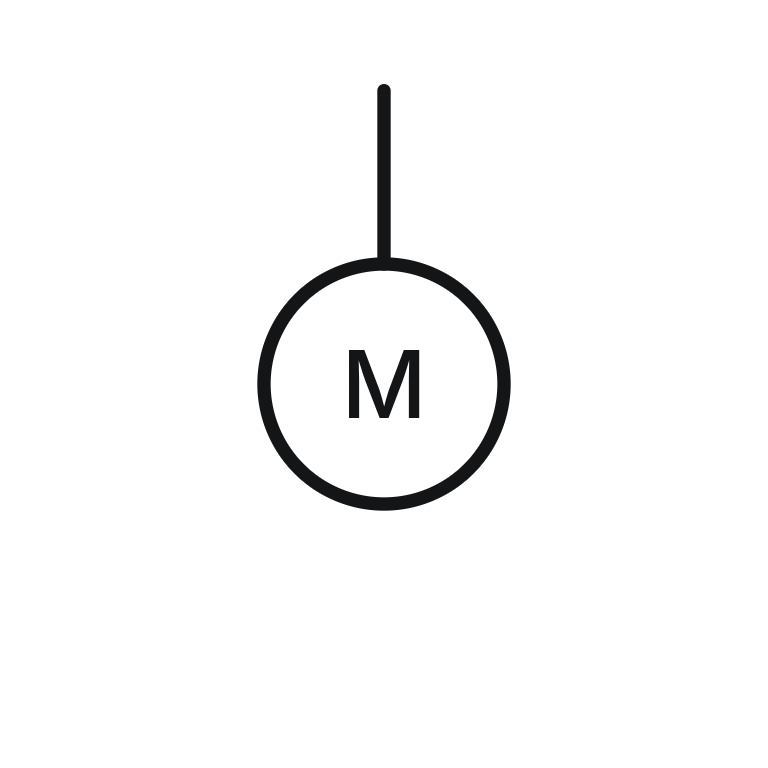
What the motor symbol means
An electric motor converts electrical power into mechanical power. On a one-line it is a load, drawn at the bottom of its feeder with its rating in kW or hp.
ANSI and IEC symbols
Where you see it
Pumps, compressors, fans and every other driven load, fed from a motor control centre, a contactor or a drive.
What is written next to it
On a one-line, the motor carries its tag and its ratings: rating in kW or hp, voltage, full load current and the starting method.
What gets checked at commissioning
Before the motor is energised, the test records usually cover: insulation resistance, winding resistance, direction of rotation with a bump test, then a no-load run with current and vibration readings. Each check is recorded against the tag, so the system can be handed over with its evidence. See commissioning software.
ANSI device numbers
Protective functions you will often find with a motor:
- 49 thermal
- 50/51 overcurrent
- 46 current unbalance
- 66 starts per hour
See the full list of ANSI device numbers with their IEC equivalents.
Related symbols
Frequently asked questions
What does the motor symbol look like?
On ANSI drawings: A circle with M, with the horsepower or kW written beside it. In IEC 60617: The machine circle with M and a tilde for an AC motor.
Is the motor symbol the same in IEC and ANSI?
No. The machine circle with M and a tilde for an AC motor. The IEC 60617 number is S00819.
Where is a motor used?
Pumps, compressors, fans and every other driven load, fed from a motor control centre, a contactor or a drive.
Which ANSI device numbers go with a motor?
49 thermal, 50/51 overcurrent, 46 current unbalance, 66 starts per hour.
- In production since 2014
- Thousands of daily users
- On MODEC FPSO projects since 2016