Neutral grounding resistor symbol
Also called NGR, Neutral earthing resistor, NER
A resistor between a transformer or generator neutral and earth, which limits the current of an earth fault.


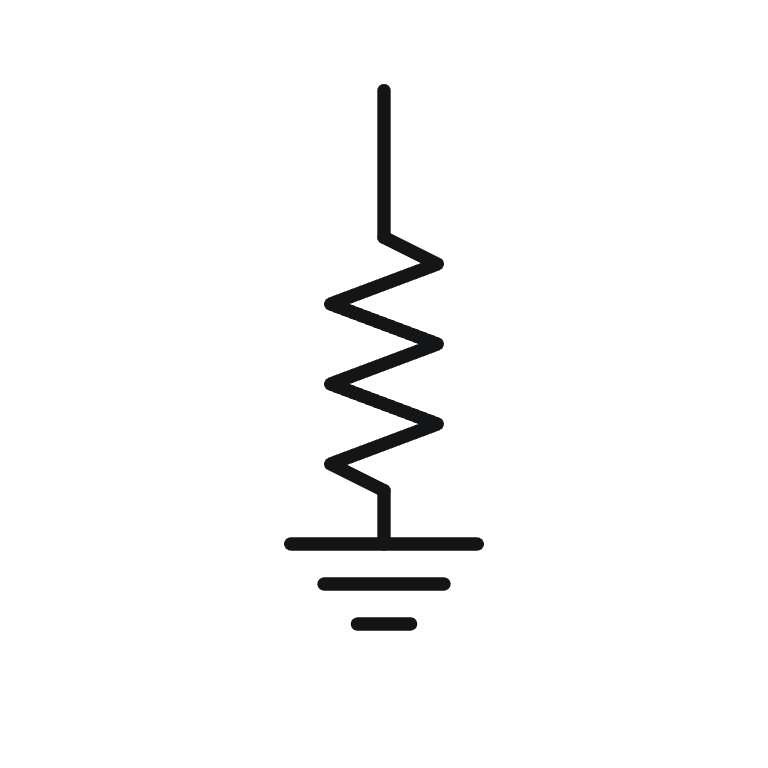
What the neutral grounding resistor symbol means
A resistor between a transformer or generator neutral and earth, which limits the current of an earth fault.
ANSI and IEC symbols
Where you see it
Medium voltage systems with resistance grounding, such as many offshore and industrial networks.
What is written next to it
On a one-line, the neutral grounding resistor carries its tag and its ratings: current and time rating (for example 400 A for 10 s) and voltage.
What gets checked at commissioning
Before the neutral grounding resistor is energised, the test records usually cover: resistance value and insulation resistance. Each check is recorded against the tag, so the system can be handed over with its evidence. See commissioning software.
ANSI device numbers
Protective functions you will often find with a neutral grounding resistor:
- 51N neutral overcurrent
- 59N neutral overvoltage
See the full list of ANSI device numbers with their IEC equivalents.
Related symbols
Frequently asked questions
What does the neutral grounding resistor symbol look like?
On ANSI drawings: A zig-zag resistor to ground, with its current and time rating. In IEC 60617: A rectangle, the IEC resistor, to earth.
Is the neutral grounding resistor symbol the same in IEC and ANSI?
No. A rectangle, the IEC resistor, to earth.
Where is a neutral grounding resistor used?
Medium voltage systems with resistance grounding, such as many offshore and industrial networks.
Which ANSI device numbers go with a neutral grounding resistor?
51N neutral overcurrent, 59N neutral overvoltage.
- In production since 2014
- Thousands of daily users
- On MODEC FPSO projects since 2016